
The introduction of AI technology has changed the way we interact with the internet. Today, AI is no longer limited to static chat. Instead, it can search on the web, extract data from multiple websites, and generate the final result for the user. AI agents can perform multiple tasks on their own. However, they face major challenges when extracting data from the internet. Modern websites use advanced security systems, such as Cloudflare, that immediately detect and block AI bots, preventing them from browsing the internet freely. Browserbase helps address this issue. It is a platform that provides real browsers for AI agents, enabling them to interact with the web reliably and at scale. This article reviews Browserbase, a browser for AI agents.

Browserbase review: A web browser for AI agents
AI agents increasingly need to browse websites, interact with web applications, and extract information just like human users. Traditional scraping and browser automation tools are often fragile, difficult to maintain, and prone to failures. Browserbase, a web browser for AI agents, is intended to solve the following pain points of traditional automation:
- Dynamic UI: The script that scrapes website data breaks whenever the website’s layout, structure, or HTML elements change.
- Anti-bot triggers: Websites using modern security walls, such as Cloudflare, immediately block AI bots from scraping data.
Browserbase helps resolve these problems by offering a manageable and scalable headless browser infrastructure.
Browserbase has established itself as a trusted platform in the AI ecosystem. Today, it is trusted by many industry leaders, such as 11x, Vercel, and Perplexity. Moreover, the platform is frequently praised by users for being simple to use, quick to set up, and effective for managing AI-driven browser tasks in one place. As AI agents increasingly perform tasks on behalf of users, such as browsing websites, gathering information, etc., Browserbase aims to provide a reliable and scalable AI web browser for AI agents.
Key features of Browserbase
Let’s talk about some of the key features of Browserbase.
Real browsers for AI systems
Browserbase provides complete browser environments for AI agents to navigate through websites, click buttons, type text, and manage sessions just like human users. If you give an AI agent a command to book a flight ticket, it won’t just parse back-end API data. Instead, it will open a travel website physically, click the calendar to select the required date, and navigate to the final payment page.
Browser-as-a-Service
A headless browser is one of the biggest advantages of Browserbase. Headless browsers are browsers with no GUI. You can interact with headless browsers by writing scripts that detail the tasks they need to perform. Such browsers are used by developers for web testing and web scraping. When it comes to web scraping, HTML extraction tools have limitations, such as poor scalability and slow performance. Browserbase eliminates the need to maintain browser infrastructure by providing built-in scaling, session management, and reliability.
Stagehand SDK
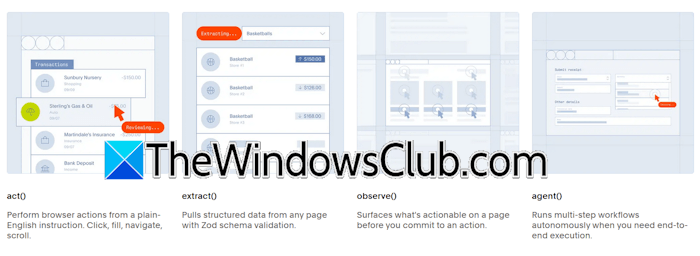
Stagehand is Browserbase’s declarative browser automation SDK designed for AI-driven workflows. Unlike traditional automation approaches, Stagehand allows developers to build browser automation workflows that are easier to manage and less likely to break when a website changes. For example, a developer can instruct an AI agent to click the login button and let Stagehand identify the correct element.
Director
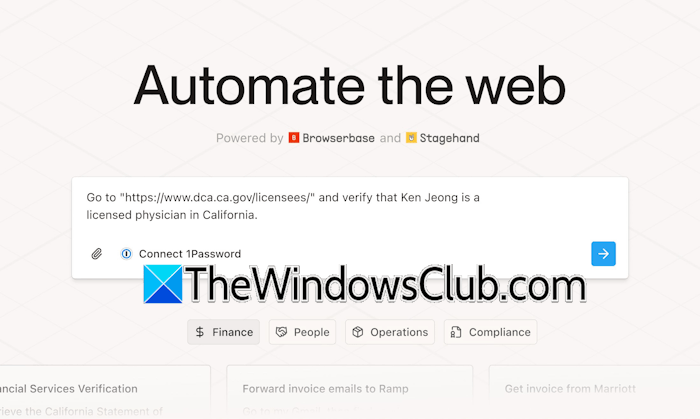
Director is Browserbase’s tool for building and managing browser-powered workflows. It serves as a control room, allowing developers to create, manage, and monitor browser-powered workflows from a single centralized environment.
Search and Fetch APIs
These are the APIs that allow AI agents to search the web and retrieve page content programmatically. These APIs help reduce the complexity of web data scraping while providing the content in a format easier for AI agents to consume.
Session logs and recordings
Browserbase provides detailed logs and recordings for debugging, monitoring, and auditing browser sessions. Every browser session is monitored through detailed logs and recordings, which are also essential for maintaining security. These logs make debugging and analysis easier compared to traditional browser automation sessions. For example, if an AI agent fails during a login session, developers can replay the session to identify the exact cause.
Live browser view
Browserbase provides real-time browser visibility via APIs for monitoring AI agents’ actions. Developers can visually observe what an AI agent is doing. This will help them diagnose issues when a workflow fails. For example, a developer can monitor an AI agent during a login session and intervene if necessary.
Native library compatibility
One of the major advantages of Browserbase is its seamless support for Playwright, Puppeteer, and Selenium. This allows developers to migrate their existing browser automation projects from these open-source frameworks to Browserbase without rewriting the entire code.
Extensible platform and scalable infrastructure
The Browserbase platform provides APIs and integrations that allow customization for specific use cases. This allows organizations to customize browser workflows for specific requirements. Additionally, Browserbase also has the ability to run thousands of concurrent browser sessions without managing infrastructure.
Core use cases of Browserbase
Let’s talk about some core use cases of Browserbase.
- AI agent web browsing: Browserbase allows autonomous AI agents to browse websites and perform tasks just like a human user. AI agents can navigate web pages, click buttons, fill forms, and complete multi-step tasks, such as ticket booking, independently. For example, an AI agent can log in to a customer portal and download monthly reports.
- Web data extraction: Traditional data extraction tools may fail when a website changes its structure or uses dynamic content. Browserbase resolves this issue by delivering headless browser infrastructure for reliable scraping and structured data collection at scale.
- Automated testing and QA: Developers can use Browserbase as a managed infrastructure to run browser-based testing workflows. This makes testing more scalable and reliable.
- Login and authentication flows: Browserbase supports complex login sequences, session management, and access to authenticated content. Many websites require users to sign in before accessing content. The platform helps AI agents manage login credentials, sessions, and cookies for secure content access on such websites.
- Research and monitoring: Companies need to monitor websites continuously for updates, new content, and pricing changes. The platform automates website tracking, making the process much easier.
- Workflow automation: Browserbase also supports end-to-end automation workflows, enabling AI agents to perform multiple actions easily, such as search, data gathering, form submission, and task completion.
- Content indexing: Browserbase provides browser rendering for AI search engines and indexing platforms.
- Multi-step web tasks: Some tasks require completing multiple actions across several pages on a website. Such complex processes include bookings, purchases, account management, etc. Browserbase enables AI agents to handle such complex workflows.
Browserbase Pricing guidance
Let’s talk about the pricing structure of Browserbase. It offers the following four pricing plans:
- Free
- Developer
- Startup
- Scale
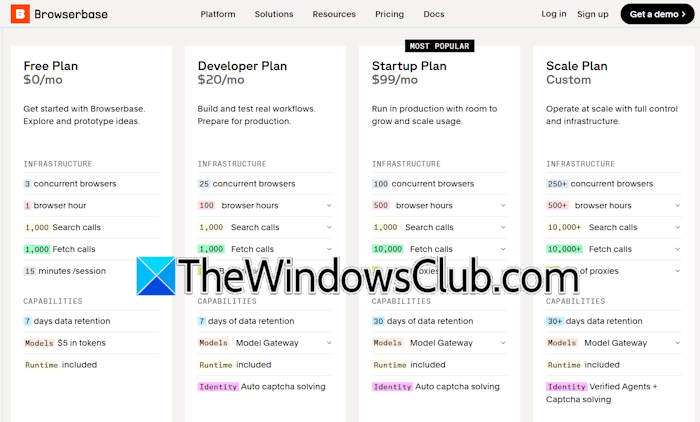
The Free plan offers 3 concurrent browsers and 1 hour of browser time. Additionally, you will get 1000 Search and Fetch APIs and 7 days of data retention capability under this plan. The CAPTCHA-solving capability and Stealth Mode are unavailable.
The Developer plan offers 25 concurrent browsers along with 100 browser hours. Apart from that, you will get 7 days data retention capability and 1000 Search and Fetch APIs under this plan.
The Startup plan is Browserbase’s most popular plan, offering 100 concurrent browsers and 500 browser hours. 30 days of data retention capability, 1000 Search APIs, and 10000 Fetch APIs are available under this plan.
The Scale plan is the custom plan of Browserbase that offers 250+ concurrent browsers, 500+ browser hours, and more than 30 days of data retention capability. While basic Stealth Mode and up to 30 days of data retention capabilities are available in both Developer and Startup plans, the Custom Scale plan offers Advanced Stealth Mode and more than 30 days of data retention capabilities.
You can get more information about the pricing plans on the official website.

Leave a Reply